
Western Australia’s furniture history reflects a broader narrative of settlement, resourcefulness, and evolving tastes. Rooted in the challenges of distance and material scarcity, early furniture design in the region was heavily shaped by necessity, local materials, and the skills of pioneering craftsmen. Today, this legacy can still be seen in Perth—and often purchased—in places like e Furniture Repurposing where residents turn to when seeking a tangible link to the past.
Colonial Foundations: Craftsmanship Born of Necessity
The earliest settlers in Western Australia brought few furnishings with them, relying instead on what could be locally produced. This led to a rise in simple, functional designs crafted from native timbers. Among the most significant of these timbers was jarrah, a durable hardwood abundant in the southwest. Its deep red hue and strength made it a staple for furniture makers from the mid-19th century onwards.
The Rise of Local Artisans: Charles Catt and Son
One of the most notable names in early Western Australian furniture making is Charles Catt and Son. Established in the late 19th century, their workshop in Fremantle became known for high-quality jarrah furniture that blended European influences with locally adapted designs. Their work included wardrobes, dining sets, and sideboards that remain valued antiques today. Catt’s legacy contributed significantly to the establishment of a recognisable Western Australian furniture style—practical, sturdy, and showcasing native materials.
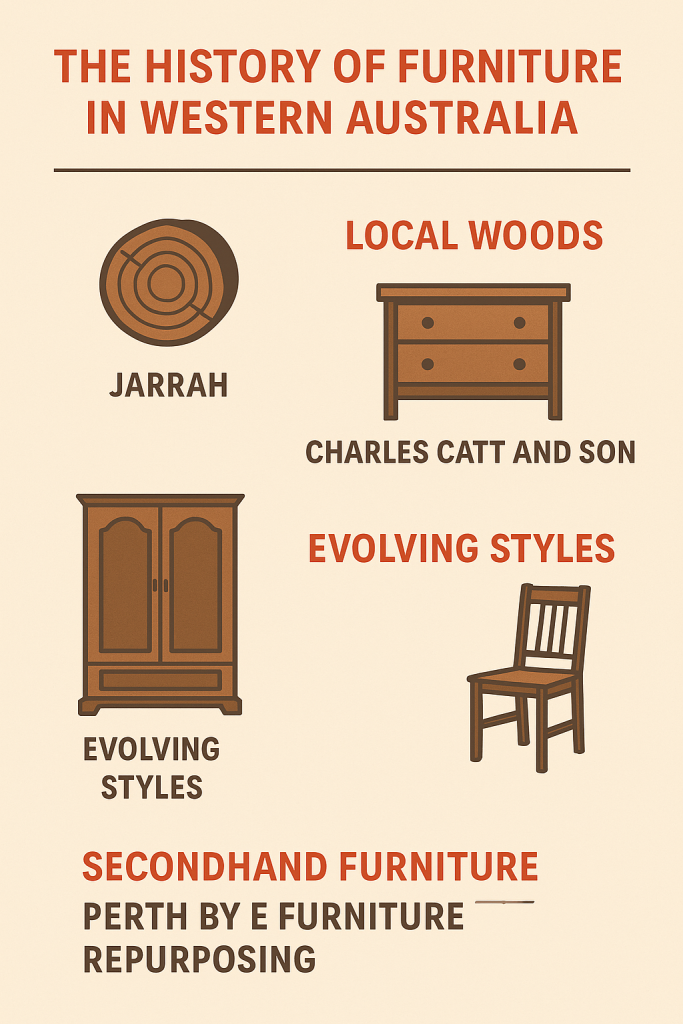
Federation to Mid-Century: Evolving Styles
As Western Australia grew, so did its exposure to national and international furniture trends. The Federation era brought a decorative flourish to many jarrah pieces, including carved motifs and polished finishes. By the 1930s and 40s, more streamlined forms emerged, reflecting the global shift toward modernism. Manufacturers began experimenting with different timbers and veneers, though jarrah remained a premium material.
The Role of Timber Mills and Furniture Factories
The state’s timber industry played a critical role in supporting local furniture makers. Towns like Manjimup and Pemberton thrived on jarrah and karri milling, with timber transported to Perth and Fremantle for processing. Several small furniture factories emerged in Perth during the 20th century, producing locally made suites that furnished homes across the region.
Furniture in the Modern Era: Heritage Meets Sustainability
Today, interest in older Western Australian furniture has grown, driven by a desire for craftsmanship, sustainability, and historical connection. This resurgence has led to a renewed appreciation for pieces found in secondhand furniture in Perth stores, particularly those showcasing original jarrah craftsmanship. Heritage furniture is not only a design statement but a sustainable alternative to mass-produced imports.
Environmental awareness has also played a role. As consumers turn away from fast furniture, secondhand and repurposed furnishings are gaining traction. A well-maintained jarrah dining table from decades past may outlast multiple modern equivalents—and with significantly less environmental impact.
Preserving the Legacy Through Secondhand Markets
Businesses focused on reclaimed, vintage, or pre-owned items are now essential to preserving the state’s furniture legacy. A secondhand furniture warehouse Perth that buyers visit may hold rare finds—Federation-era sideboards, mid-century jarrah armchairs, or even pieces by early local craftsmen like the Catts.
By purchasing such items, consumers contribute to a circular economy while keeping Western Australian furniture history alive in daily use. It’s a form of preservation through practicality—an echo of the mindset that shaped the industry’s early development.
Western Australia’s furniture history is marked by ingenuity, local materials, and skilled artisanship. From Charles Catt’s early designs to the enduring legacy of jarrah craftsmanship, these pieces continue to influence both collectors and practical buyers. For those seeking authenticity and sustainability, the secondhand furniture market offers not just style, but a direct connection to the region’s material culture.


